How to Choose a Neurosurgeon
A patient’s guide to finding quality health care
There are tremendous advances taking place in medicine today, but in order to benefit from them, the health care consumer must take an active role. The best health care will not find you; you have to seek it out.
While the United States offers the highest standard of health care in the world, there is still huge treatment variation based on the doctor you see. Bottom line, the doctor you choose will determine the quality of care you will receive. Here is an overview of how to navigate through the health care system to find the best doctor for you.
The era of the super-specialist
First, the health care consumer needs to understand that
today’s medical field is divided into very narrow specialty categories.
Twenty years ago, the specialty of neurosurgery addressed a variety of problems. While a neurosurgeon in a small, rural town may still address
all these problems, most neurosurgeons today specialize in a few of those
areas. Therefore, the educated health care consumer should seek out a
neurosurgeon who primarily treats patients with a particular condition.
This increases the likelihood that the surgeon will be more proficient
in surgery and will use the most advanced surgical techniques available.
problems. While a neurosurgeon in a small, rural town may still address
all these problems, most neurosurgeons today specialize in a few of those
areas. Therefore, the educated health care consumer should seek out a
neurosurgeon who primarily treats patients with a particular condition.
This increases the likelihood that the surgeon will be more proficient
in surgery and will use the most advanced surgical techniques available.
As with anything in life, practice makes perfect. All clinical outcome studies confirm that the more times a surgeon performs a procedure, the better they become at it. A second key indicator of quality, aside from specializing 100 percent in a specific niche, is the volume of surgeries a physician performs annually. Within the field of spine, for example, a surgeon who specializes 100 percent in spine surgery may perform more than 200 spine surgeries annually.
About using your health insurance plan as a guide
Most people are surprised to learn that their health insurance provides little help in finding the best specialist within a specific niche. Offering a preferred provider directory of specialists gives no real indicator of quality. Inclusion in a PPO directory typically only means that the physician has agreed to accept a discounted rate for payment from the insurance company. In this sense, “preferred provider” simply means that the insurance company would “prefer” you to see doctors who have agreed to accept a discount. These discounts can be steep depending upon the health insurance plan.
Unlike other industries, in which market demand and the highest quality product commands the highest price, health care is an industry that is woefully behind the times. But that is changing.
A growing trend nationwide is that super-specialists, who are in the highest demand by virtue of reputation and outcomes, can be less motivated to accept discounted reimbursement from some health plans. These super-specialists typically have full schedules and don’t need to discount their services to attract patients. Consequently, they may choose not to be included in a PPO panel, while other physicians may have to rely on discounting to attract patients.
Most PPO plans have out-of-network benefits that enable patients to see a physician who is not listed in the PPO directory. Typically, the person may have to pay a larger percent of the bill and a larger deductible. But for complex problems, this still may be the more prudent approach in the long run to access the most current technology and the specialist with the least invasive treatment alternatives.
More and more employers are recognizing that traditional health care plans have historically done a poor job of establishing panels of physicians based on quality care. Consequently, larger employers are seeking out centers of excellence for the treatment of complex problems like cancer, heart disease, neuroscience, organ transplants, joint implants and spine problems.
The business of being a super-specialist
Part of the problem related to PPO panel discounting is that it penalizes top super-specialists who invest in the most advanced and expensive technology for their offices, highly trained physician assistants and a modern clinic facility with multiple capabilities under one roof for patient convenience. By being on a PPO panel, a super-specialist who has invested additional years in training, fellowships and advanced, continuing education courses in the latest procedures must accept the same level of payment as a generalist who has not similarly invested in training, support staff and clinic facilities.
In this sense, health insurance plans are not able to steer consumers to the highest quality physicians. They are, however, in a difficult position because they find themselves somewhat handcuffed and unable to direct consumers to the highest quality physicians. On one hand, every health care plan medical director knows that the best physicians and super-specialists will save money as outcomes are typically better, and many times these specialty centers provide minimally invasive surgery options that are less risky. These directors are trying to determine ways to subtly encourage patients to seek out centers of excellence for complex problems. However, they are also concerned with possible litigation from other physicians that may develop if they overtly favor one center over other physicians.
Under this current scenario, health care consumers are left on their own to search for a top health care provider. It is their responsibility to research the best center of excellence for treatment of a complex health problem.
How to find a super-specialist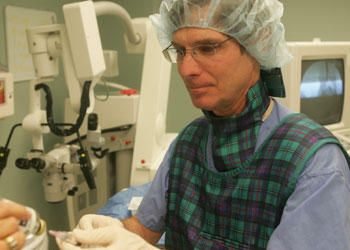
There are many ways to identify the best specialist within a given area. A good place to start is to consult a family practice doctor who addresses your general health care needs. This “primary care” doctor will usually know the best super-specialists within a specific region. Also, since this primary care physician may have referred patients to that specialist before, they may have seen firsthand their clinical outcomes after surgery. If these outcomes are poor, the primary doctor will not refer additional patients.
On the downside, this referral process abdicates the selection process to someone else. The educated health care consumer would do well to perform secondary research to identify the best possible specialists and clinics within a given specialty.
The Internet can provide a wealth of helpful information. The educated consumer can locate information on a doctor’s education, training, clinic and area of specialization.
Get a second opinion
Most health insurance plans advise or require that the health care consumer receive a second opinion when treatment involves a complex surgical procedure. This is excellent advice. Furthermore, the health care consumer should not inform the second provider that their visit relates to a second opinion, since some physicians are reluctant to provide conflicting opinions. If you have received two identical, unbiased opinions related to your diagnosis and recommended treatment, you can proceed accordingly with more confidence that you are pursuing the right approach.
If the two opinions disagree, you should examine the training and qualifications behind each opinion to determine which is most likely the correct recommendation. Another option is to pursue a third opinion, but this can add to your confusion.
Be willing to travel
A trend in medicine is that the best specialists are creating Centers of Excellence that focus on certain problems like cancer, neuroscience, spine problems, diabetes, asthma, etc. Because the cost of developing these centers is high, they typically exist only in larger cities. Consequently, if you need complex surgery, be prepared to travel.
The physician visit
The best specialists within a given niche will typically provide all the appropriate nonsurgical and surgical treatment options for your problem, along with the pros and cons of each. In some cases, treatment may include watchful waiting. If your doctor is unwilling to answer questions about your diagnosis or treatment, you’re in the wrong place. Go find another doctor.
[Top]