Brain Tumors
Facts | Symptoms | Diagnosis | Treatment options
Facts
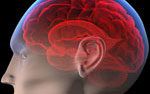
A brain tumor is an abnormal growth of tissue inside the skull. This growth can place pressure on tissue within the skull and impair function. Primary brain tumors are tumors that originate in the brain. Although the cause of most brain tumors is unknown, the leading cause is believed to be abnormal growth among cells surrounding neurons.
Each year, more than 100,000 people will be diagnosed with a brain or spinal cord tumor. Brain tumors can happen to anyone. While they occur across all age groups, they more frequently appear in children under the age of 15 and in older adults. Adults are more likely to develop a metastatic brain tumor, while spinal cord tumors seem to occur more in younger adults.
According to the Central Brain Tumor Registry of the United States, about 10.9 out of every 100,000 people in the U.S. will have a benign or malignant brain tumor in their lifetime. Out of every case of cancer annually, brain tumors represent only 1.3 percent. The incidence of malignant brain tumors is 6.1 per 100,000 people.
There are many different types of brain tumors. They are generally categorized according to the kind of cells/tissue from which they form. Gliomas, which form from glial cells, are the most common type of adult brain tumors, particularly astrocytomas. Grade I is the least aggressive astrocytoma, while Grade IV is the most aggressive. Symptoms and treatment depend on its location and grade. Other types categories of brain tumors include non-gliomas, such as pineal tumors and pituitary tumors, and other gliomas such as ganglioneuroma and brain stem glioma. Metastatic tumors are tumors that originated in another part of the body but have spread to the brain. Pituitary tumors are found in the pituitary gland, a small dime-sized organ located in the center of the brain that generates hormones. A pituitary tumor can therefore result in hormonal imbalances and related problems throughout the body. These problems can include headaches, vision problems, infertility and/or menstrual problems in women, abnormal growth and other skin and body changes.
[top]
Symptoms
Symptoms of brain tumors generally develop slowly and worsen over time unless they are treated.
- Headaches
- Seizures
- Nausea and vomiting
- Vision or hearing problems
- Behavioral and cognitive problems
- Motor problems
- Memory loss
- Balance problems
[top]
Diagnosis
The
diagnosis of a brain tumor can imply cancer, but it is important
to note that not all brain tumors are cancerous. Some non-cancerous,
benign tumors can be just as dangerous as cancerous tumors if
they form in the brain stem or spinal cord.  "Brain Tumors
in Children," a book published in 1994, reports encouraging
statistics that state that 60 percent of all children with brain
or spinal cord tumors will survive into adulthood.
"Brain Tumors
in Children," a book published in 1994, reports encouraging
statistics that state that 60 percent of all children with brain
or spinal cord tumors will survive into adulthood.
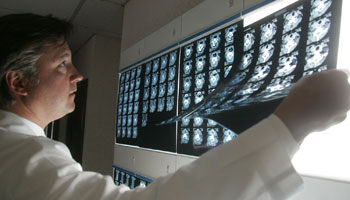
After conducting a neurological exam, your doctor will use special imaging techniques such as a CT scan or MRI or lab tests such as an EEG. Also, a biopsy allows the doctor the diagnose the particular type of brain tumor by taking a sample of tissue from a suspected tumor.
[top]
Treatment
Radiation, chemotherapy and surgery are the most common types of treatments for brain tumors.
Surgery for brain tumors aims at removing the entire tumor, since residual tumor cells can cause recurrence of the tumor. After surgery, radiation may be used to eliminate the portion of the tumor that could not be removed surgically. Radiation may also be used when surgery is too risky. Chemotherapy is typically injected into a vein or ingested and aims at destroying tumor cells.
Gamma knife neurosurgery
Gamma knife surgery represents a significant advance within the field of neurosurgery. The tool delivers beams of radiation to abnormal brain tissue and only affects the area of the brain where multiple beams meet. This procedure is often used to treat brain tumors and other conditions within the skull in a noninvasive fashion. It allows for extreme precision and accuracy and involves no incisions and a minimal hospital stay.
IMRT radiosurgery
Intensity-modulated radiation therapy (IMRT) can treat brain tumors of any shape or size while at the same time sparing the greatest amount of normal tissue. This highly advanced technique involves using digital images of the tumor to coordinate a three-dimensional approach in which beams of radiation are delivered to it. The radiation is controlled, and, therefore, can better target the region where the tumor resides with a more concentrated dosage.
IMRT radiosurgery represents a significant advance within the field of spinal tumor treatment and is expected to eventually become the standard treatment for primary and metastatic tumors.
[top]
For More Information
For information about clinical trials related to brain tumor treatment, please call the National Cancer Institute for a listing of NCI-sponsored trials at 1-800-4CANCER, or visit their Web site at https://www.braintumor.org
[top]